
Technology engineered around how your business actually operates.
Custom software, AI agents, integrations and automation. Designed around real business processes, for greater control, efficiency and room to grow.
Start with the problem. We will help determine what technology makes sense.
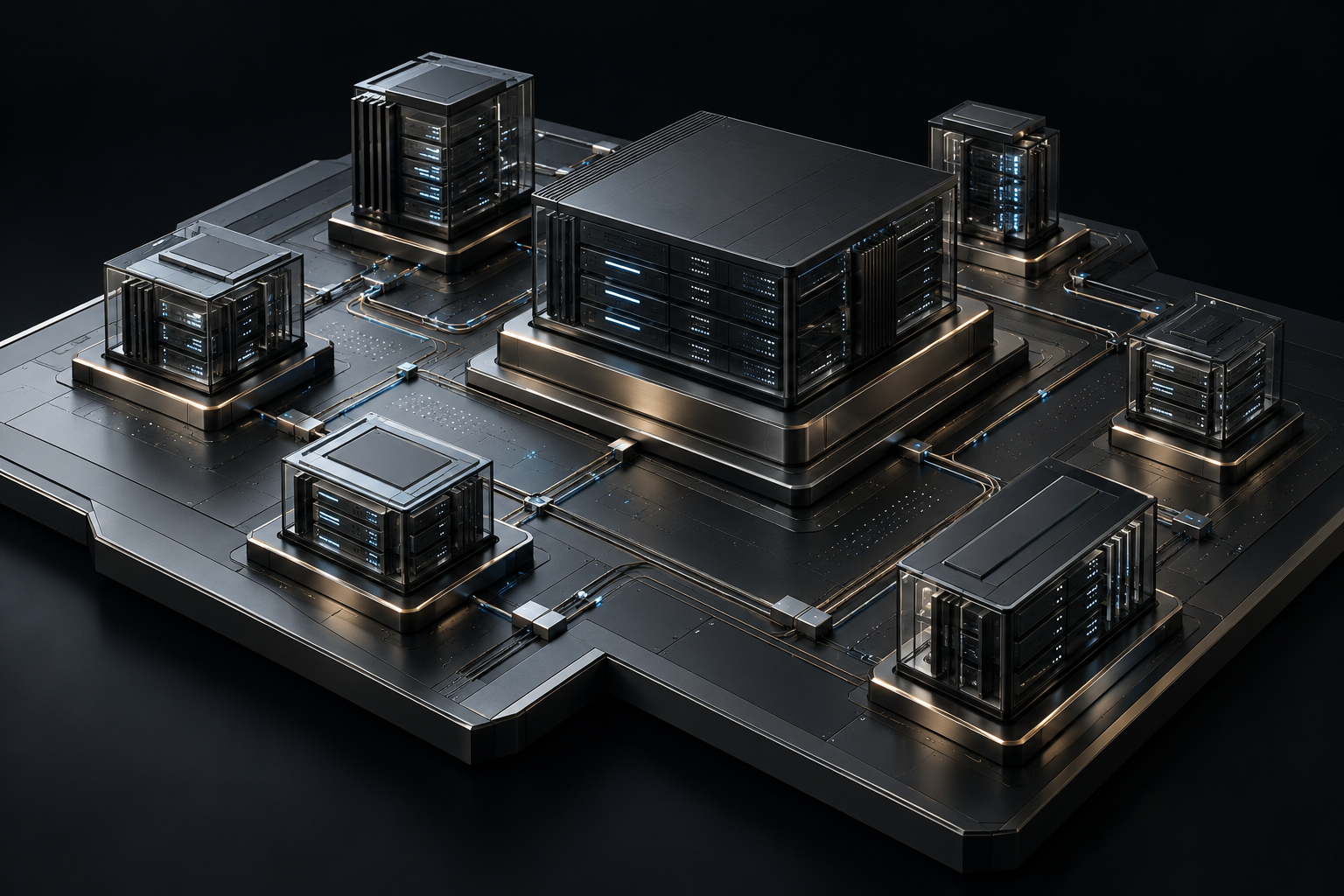 CRMORCHESTRATIONERPDATA & AIConceptual system architecture
Built around real
business operations.
We do not begin
with software.
We begin with what needs to work better. Sometimes the answer is a new system. Sometimes an integration, automation or AI. Sometimes it is a product that already exists.
Software built around your operation.
When your business rules are distinctive, your software should support them. We design systems around your processes, people and decisions.
process
architecture
software
Your rules. Defined roles. Connected information.
Complexity is familiar.
Friction does not have to be.
Disconnected tools often become disconnected work. The starting point is recognising where information, time and visibility are being lost.
The same information is entered more than once.
When email, spreadsheets and business systems hold separate copies of a record, the first task is to identify which source owns it. Integrations can then distribute approved updates.
Explore the approachCritical processes rely on spreadsheets.
A spreadsheet can be a useful tool. When permissions, exceptions and dependencies grow, it may be carrying a process that needs a more structured system.
Explore the approachReports are still assembled manually.
Connect the underlying sources, agree the definitions and build reporting around the decisions management needs to make.
Explore the approachTeams spend time moving data between tools.
Map repeated hand-offs, business rules and exceptions before automating a workflow. Give people clear responsibility for the cases that need judgement.
Explore the approachExisting software limits how the business operates.
Assess which constraints come from configuration, integrations or the system itself. Modernisation can be gradual, preserving what still works.
Explore the approachOne enquiry.
A connected operation.
Request received
Context checked
Record updated
Task assigned
Approved action
Status available
Information moves through defined rules and approved systems. People handle the exceptions that need judgement.
Intelligence inside the operation.
Control around every action.
AI is useful when it works with relevant context, approved systems and clear boundaries. Responsible AI is an engineering decision.
Defined autonomy
Clear permissions and explicit limits on what an agent can do.
Human oversight
Review and escalation where the decision needs judgement.
Traceable actions
Records of inputs, actions and outcomes, designed into the workflow.
Deliberate data access
Approved sources, role-based access and realistic evaluation.
Good software starts before the first line of code.
From the first operational question to a system people can use, every stage has a purpose.
See how we work01Discovery
02Process mapping
03Architecture
04Prototyping
05Engineering
06Deployment
07Evolution
Technology changes when
the operation changes.
The same tools can solve very different problems. Industry context determines what should connect, what should be automated and where people stay in control.
Real estate
Connect the enquiry to the next conversation, with clear ownership and follow-up.
Retail & commerce
Keep orders, stock, finance and fulfilment working from the same information.
Professional services
Give delivery teams continuity from the first enquiry to the final invoice.
Logistics
Connect events, responsibilities and exceptions across the delivery operation.
A clearer view of
your next technology decision.
Practical perspectives on software, automation and the way work moves through a business.
All insights